Def Leppard Defy Time With a Prime-Level Performance in Las Vegas — February 5, 2026
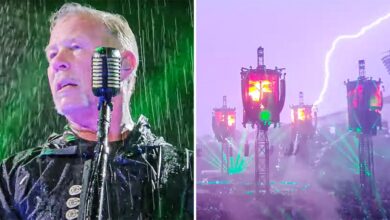
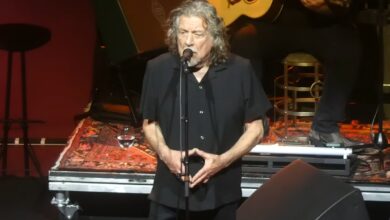
On February 5, 2026, Las Vegas did what Las Vegas does best: it turned a Thursday night into a headline. Inside The Colosseum at Caesars Palace, the city’s neon chaos faded into something tighter, louder, and strangely intimate as Def Leppard rolled into night two of their residency. This isn’t a stadium where the band becomes a distant silhouette; The Colosseum compresses everything—sound, faces, reaction—into a space that feels like a front-row experience even when you’re not. Fans came in buzzing about the revamped production, the deep-cut-friendly setlist, and the promise that this run was “taken up many levels.” When the house lights finally dropped and the show hit its stride, it felt less like a concert and more like a shared memory being created in real time.
The residency framework gave the evening a different kind of confidence. Def Leppard didn’t have to sprint through the hits as if racing the clock or the next city; they could pace the story. The band had been talking publicly about mixing classics with rarities and leaning into a show that feels “spectacular,” and you could sense that intent in the structure: dramatic atmosphere, clean transitions, and a setlist that wasn’t afraid to get emotional early. Even before the song everyone wanted to talk about arrived, the room felt primed for something bigger than a greatest-hits victory lap. This was a band with nothing to prove, still acting like they had everything to say.
A surprising mood-setter helped frame the night like a mini-movie rather than a random playlist. An Elton John opener from tape—“Funeral for a Friend/Love Lies Bleeding”—played like an overture, instantly telling the crowd this would be theatrical, not casual. That choice matters because it sets a tone of drama and build, which is exactly the emotional language you need before you drop a song like “Bringin’ On the Heartbreak” into the middle of the night. The Colosseum, built for showmanship, responded the way it always does when the room senses a “real” Vegas-style production. People sat up. Phones came out. Then the band hit, and suddenly the theater became a single, roaring organism.
They opened with “Rejoice,” a newer track that worked as an adrenaline shot and a statement of intent: this residency wasn’t designed to be a museum exhibit. The sound in the room was immediate and physical—tight lows, crisp vocals, guitars that cut without tearing your ears off. Def Leppard used those first songs to lock the crowd into the present tense, not just the nostalgia zone. “Animal” carried that glossy pulse that turns strangers into a choir fast, and “Let’s Get Rocked” brought the kind of no-apologies fun that makes Vegas feel like the right city for this band at this point in their lives. From the jump, the audience wasn’t simply cheering. They were participating.
Then came the pivot: “Personal Jesus.” In a residency environment, a cover can either feel like a detour or a jolt of personality. Here it felt like a curveball thrown on purpose—something darker, heavier, and more stomping than the neon-bright anthems. It was also a perfect palate shift before the emotional gut-punch the crowd knew was coming. The band didn’t treat it like filler; they played it like it belonged in their world. The payoff wasn’t just the song itself, but the way it reset the room’s emotional temperature—cooler, more intense, more focused—so the next moment could land like a true dramatic turn rather than another singalong.
And then it happened: “Bringin’ On the Heartbreak,” dropped into the set like a slow-motion spotlight. This song has always carried a particular weight in Def Leppard’s catalog because it’s one of the tracks that shows their early identity—melodic, dramatic, and raw around the edges—before the glossy arena-machine era fully took over. In The Colosseum, you could feel the difference immediately. The air changed. People stopped moving and started listening. The opening lines didn’t feel like a “classic” in a playlist; they felt like an old letter being read out loud in a crowded room. That’s the magic of a smaller theater: heartbreak doesn’t get swallowed by distance.
Joe Elliott’s vocal approach in this setting was the kind of thing that makes fans argue about shows for weeks afterward. He didn’t oversing it to prove power; he sang it to deliver meaning. In a space where you can see faces, he performed as if he was talking to individuals, not an anonymous sea of bodies. The phrasing had that careful control that keeps a dramatic song from turning into melodrama, and the band behind him played with patience, letting the song breathe. The chorus hit, and it didn’t explode like “Pour Some Sugar on Me.” It surged—like a wave rising rather than a firework detonating—because that’s what heartbreak does when it’s honest.
One of the most special parts of this performance is how the crowd reacts to a song that’s not just popular, but personal. You could hear it in the way people sang—less like party shouting, more like confession. The Colosseum’s acoustics helped, too, because the audience sound didn’t smear into noise; it stayed intelligible, like thousands of voices forming one clear response. There’s a particular thrill when a band realizes the crowd is carrying the emotional weight with them, and you could feel that feedback loop happen in real time. Elliott would pull back slightly, the audience would push forward, and the song would swell into something bigger than the band or the venue.
Then the night did the classic Def Leppard move: it turned heartbreak into horsepower. “Switch 625” followed, and the contrast was electric. If “Bringin’ On the Heartbreak” is the wound, “Switch 625” is the adrenaline that makes you forget you’re bleeding for a minute. In this pairing, the band highlighted something people sometimes forget: Def Leppard’s musical identity isn’t only hooks and choruses—it’s also tight musicianship and arrangement intelligence. The guitars felt like they were speaking in quick, bright sentences after the slow, heavy paragraphs of “Heartbreak.” It was a smart sequencing choice, and in a residency where you can fine-tune pacing night after night, you could tell they were aiming for maximum emotional impact.
From there, the set flowed like a story that knew exactly when to shift moods. “Just Like ’73” and “Rocket” brought the crowd back into motion, reminding everyone that the band can still deliver propulsion like it’s muscle memory. The show’s production enhanced that feeling without drowning it in gimmicks—strong visuals, confident lighting, enough spectacle to justify the venue, but not so much that you felt like you were watching screens instead of musicians. In Vegas, it’s easy for a concert to become “content.” This didn’t. It felt lived-in. The energy stayed human, which is the key ingredient that makes big songs land as real moments instead of rehearsed routines.
The emotional dip-and-rise continued with “Rock On” and “White Lightning,” two songs that hit very differently but both served the residency’s purpose: broaden the emotional palette. “White Lightning,” in particular, carries history and weight in the band’s world, and you could sense the crowd’s respect even if not everyone was fully tracking every layer of meaning. That kind of dynamic is what separates a residency show from a quick tour stop. The band has time to take risks, include depth, and trust the audience to come with them. And once the audience feels that trust, they give something back: attention, silence when it matters, and louder explosions when the party songs return.
As the night moved toward its closing stretch, you could feel “Bringin’ On the Heartbreak” lingering in the background like a perfume that won’t fade. Even when the set shifted into more overt anthems—“Armageddon It,” “Love Bites,” “Rock of Ages”—the crowd’s emotional openness stayed. That’s what a great placement song does. It changes how the rest of the show is received. The band didn’t just “play the hits”; they built a mood arc where heartbreak had a role, not just hype. Fans who came for the big choruses ended up getting something deeper, and that deeper moment made the choruses feel even more earned.
And when “Photograph” eventually arrived, it played like the release valve—an eruption that only felt that huge because the show had already taken people somewhere vulnerable earlier. The audience response was massive, but it wasn’t empty hype; it was the sound of people grateful to be together inside songs that have been with them for decades. That’s the residency superpower: the band can build an emotional architecture that makes familiar tracks feel newly alive. By the time “Hysteria” and “Pour Some Sugar on Me” closed the night, the crowd wasn’t just satisfied. They were glowing, like they’d been part of something bigger than a setlist.
What made “Bringin’ On the Heartbreak” the night’s centerpiece wasn’t that it was the loudest moment—it wasn’t. It was that it was the moment where the band and the audience met in the same emotional place, at the same time, and held it long enough for it to matter. In a city full of distractions, that’s rare. In a room built for spectacle, it’s even rarer. The performance felt like a reminder that Def Leppard’s legacy isn’t only glossy choruses and party riffs. It’s also the ability to make thousands of people feel something sharp and honest together, then walk them gently back into the light.
And maybe that’s why fans keep framing this residency run as “best concert I’ve ever attended” territory. Not because the band is trying to outdo their past with speed or volume, but because they’re delivering a better kind of show: paced, emotional, and confident enough to let a song like “Bringin’ On the Heartbreak” sit right in the middle of the party and still win the night. February 5, 2026 didn’t feel like a nostalgia event. It felt like a living band using a legendary venue to remind everyone why those songs became legendary in the first place.