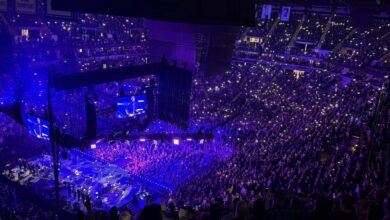
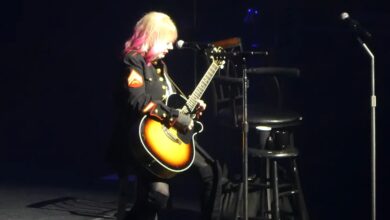
Creed’s “My Sacrifice” Live at RodeoHouston NRG Stadium, Houston TX (March 11, 2026) Delivered One of the Night’s Most Emotional Stadium Moments
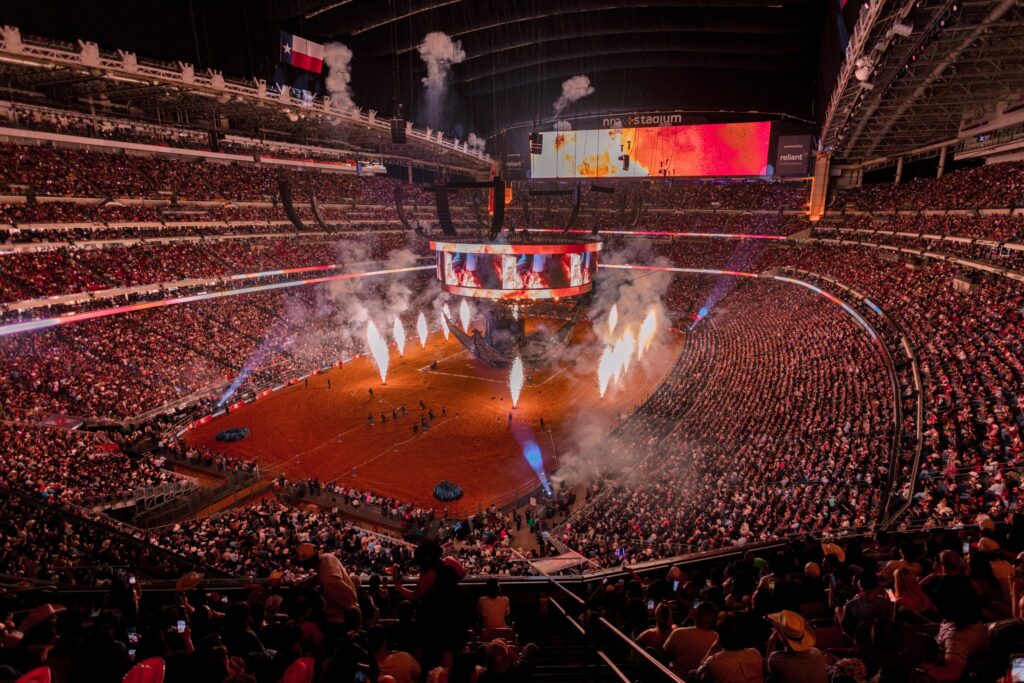
Creed’s appearance at RodeoHouston inside NRG Stadium on March 11, 2026, became one of those rare concert moments where nostalgia, spectacle, and genuine emotion collided in a way that felt surprisingly fresh. The Houston Livestock Show and Rodeo has hosted countless artists across genres, but seeing a post-grunge powerhouse like Creed command that massive circular stage created a unique atmosphere. By the time the band reached “My Sacrifice,” the stadium had already warmed to the energy of the performance. What started as curiosity from some attendees quickly transformed into a full-scale arena sing-along, proving that certain songs carry a life far beyond the era that first made them famous.
The setting itself played a huge role in shaping the emotional impact of the performance. NRG Stadium is designed to amplify spectacle, with the rodeo stage placed in the center and tens of thousands of fans surrounding it on all sides. Unlike a traditional rock concert where the audience faces a single direction, RodeoHouston creates a 360-degree experience. That format meant Creed’s performance unfolded like a giant communal ritual rather than a standard stage show. When the band launched into “My Sacrifice,” the circular crowd layout allowed the sound and energy to ripple outward across the stadium, creating the feeling that the entire venue was participating in the moment.
Creed’s history made the moment even more fascinating. The band first exploded into mainstream success in the late 1990s and early 2000s, building a reputation for emotionally charged rock songs that balanced spiritual themes with massive arena-ready choruses. “My Sacrifice,” released in 2001, quickly became one of their defining tracks. Over the years it evolved from a radio hit into something more symbolic—an anthem about redemption, reflection, and personal growth. Performing it in 2026 carried a deeper resonance because both the band and their audience had aged with the song. The lyrics about looking back and moving forward felt less like dramatic rock poetry and more like lived experience.
Scott Stapp’s stage presence also shaped the atmosphere of the night. Known for his intense vocal delivery and reflective onstage commentary, Stapp approached the Houston crowd with a tone that felt almost conversational. Between songs he spoke about personal struggles, faith, and the importance of connection. Those themes naturally flowed into “My Sacrifice,” which already carries a tone of emotional reckoning. By the time the song began, the audience had been primed for something reflective and powerful rather than simply loud. That preparation turned the performance into something closer to a shared emotional moment than a standard rock sing-along.
Musically, the band sounded remarkably tight. Mark Tremonti’s guitar tone remained thick and muscular, anchoring the performance with the heavy riffs that defined Creed’s early sound. The rhythm section provided a steady pulse that allowed the song’s dynamics to breathe. The band resisted the temptation to rush through the track, instead letting the arrangement build gradually toward its soaring chorus. That pacing mirrored the structure of the original recording but gained a new sense of weight in the enormous stadium environment. The result was a version that felt both faithful to the original and magnified by the scale of the setting.
The crowd response was one of the most striking elements of the night. RodeoHouston audiences can sometimes be unpredictable because the event draws people from many musical backgrounds. Some attend primarily for the rodeo competition, others for the carnival atmosphere, and many simply for the social experience. Yet when the opening chords of “My Sacrifice” rang out, the entire stadium seemed to shift focus. Thousands of voices joined the chorus, creating a layered wave of sound that echoed through the dome. In that moment the audience stopped feeling like separate groups and became a single collective choir.
Part of what makes “My Sacrifice” work so well in a setting like this is the song’s structure. It begins with a reflective tone before gradually rising toward an explosive chorus. That design is almost tailor-made for stadium performances because it allows the tension to build before releasing it in a massive sing-along moment. Creed has always understood how to write songs that scale up to huge venues, and this track remains one of their best examples. In Houston, the chorus seemed to bounce off the stadium walls, returning to the stage with even greater intensity.
The emotional weight of the performance also reflected the band’s long and complicated journey. Creed’s career has included chart-topping success, public criticism, hiatuses, and reunions. Seeing the band command such a massive audience years later added a layer of narrative satisfaction. “My Sacrifice” itself carries themes of reflection and reconciliation, which made it feel almost autobiographical in this context. As the band delivered the final chorus, the moment felt like a celebration not only of the song but of the long road that had brought them back to stages of this magnitude.
Returning to the studio version of “My Sacrifice” highlights just how carefully the song was constructed from the beginning. The original recording balances heavy guitars with atmospheric layers, creating a sound that feels both intimate and enormous. The vocal performance carries a sense of quiet vulnerability before rising into one of the most recognizable choruses of early-2000s rock. Hearing that studio blueprint alongside the Houston performance makes it clear why the song continues to thrive in live settings. Its emotional architecture remains strong enough to support countless reinterpretations.
Looking back at earlier live renditions of the song reveals how the band’s relationship with it has evolved. Performances from previous tours often carried a sense of urgency, as if the band were trying to prove something to audiences or critics. Over time that urgency has softened into confidence. The Houston performance reflected a group comfortable with its legacy. Instead of pushing the song aggressively, the band allowed it to unfold naturally, trusting the audience to carry part of the emotional weight.
Comparing this performance to other large-scale rock moments also shows why Creed’s songwriting still resonates. Many modern stadium acts rely heavily on elaborate visuals and choreography, yet Creed’s strength lies in the emotional clarity of their songs. Tracks like “My Sacrifice” do not need complicated staging to connect with audiences. The simplicity of the message—reflection, redemption, gratitude—translates easily across generations. In Houston, that simplicity became an advantage, allowing the crowd to engage directly with the music rather than being distracted by spectacle.
It is also interesting to consider how the cultural perception of Creed has shifted over time. In the early 2000s the band faced criticism and occasional ridicule from parts of the music press. Yet years later many listeners have rediscovered the sincerity in their music. Songs that once sparked debate now feel like artifacts of a particular emotional era in rock history. The Houston performance suggested that audiences are ready to embrace that sincerity again without irony. The crowd reaction to “My Sacrifice” sounded genuine rather than nostalgic in a purely comedic sense.
The RodeoHouston performance ultimately demonstrated how certain songs evolve alongside their audiences. “My Sacrifice” began as a rock radio hit but has gradually transformed into something closer to a generational anthem. Listeners who first heard the song in the early 2000s now bring decades of personal history with them when they hear it again. That accumulated experience changes the meaning of the lyrics, making them feel more reflective and personal than they might have seemed at first.
Another important aspect of the Houston performance was the way the band balanced nostalgia with immediacy. Reunion shows can sometimes feel like museum pieces, repeating old material without much emotional engagement. Creed avoided that trap by performing the song with a sense of present-day urgency. The band did not treat “My Sacrifice” as a relic. Instead, they approached it as a living piece of music capable of generating new memories for the audience.
By the time the final notes echoed through NRG Stadium, the performance had achieved something that many reunion tours struggle to capture. It reminded listeners why the song mattered in the first place. The crowd response, the scale of the venue, and the band’s confident delivery all combined to create a moment that felt both nostalgic and immediate. It was a reminder that great rock songs do not simply survive across decades—they grow stronger as new audiences rediscover them.
In the end, the March 11, 2026 performance of “My Sacrifice” at RodeoHouston showed how powerful the intersection of place, song, and audience can be. A track originally released more than two decades earlier suddenly felt enormous again, echoing through a stadium filled with fans who knew every word. That kind of moment cannot be manufactured. It happens only when a song carries enough emotional truth to unite thousands of voices at once, turning a simple performance into something unforgettable.