Def Leppard Turn Back Time With “Rock Of Ages” In Las Vegas At The Colosseum On February 28, 2026
Las Vegas has a way of making legacy acts feel either frozen in amber or strangely reborn, and on February 28, 2026 at The Colosseum at Caesars Palace, Def Leppard landed firmly in the second category. The final Saturday of a residency carries a particular electricity: it’s part victory lap, part “let’s make this one count,” and part celebration with a crowd that’s traveled in from everywhere because a fixed-room run feels like an event, not just another tour stop. In that context, “Rock Of Ages” doesn’t function as a nostalgia checkbox. It becomes a statement of identity—loud, playful, arena-sized, but delivered with the tight control of a band that knows exactly how to fill a room designed for spectacle and clarity.
“Rock Of Ages” has always been a song with its own built-in ceremony. Even before the main riff arrives, that famously goofy, instantly recognizable intro is like a curtain rising—one weird phrase, one second of suspense, and then the guitars hit and the audience is already smiling. In a residency setting, that moment gets sharper because the room is consistent: the band can refine tiny timing choices night to night, and the audience can hear details that stadium wind and distance usually smear. The Colosseum’s more focused acoustics reward rhythm guitar precision, backing vocal blends, and the punch of Rick Allen’s snare in a way that makes this song feel extra “alive,” like it’s being assembled in real time right in front of you.
What makes this February 28 version feel different isn’t that Def Leppard tried to reinvent the track. It’s the opposite: they let it be what it is, unapologetically, while letting the residency format elevate the performance around it. The band has spent decades learning exactly how big “big” should be—how long to hold a pause so the crowd fills it, how to shape a chorus so it hits like a wave rather than a shout, how to keep the groove from racing when the room starts clapping on instinct. In Vegas, those micro-decisions matter more, because people aren’t just hearing the song; they’re hearing the band’s craft.
The deeper story of this night is how “Rock Of Ages” sits inside a set built to feel like a guided walk through eras—classic hits, curveballs, and a few choices that underline how seriously Def Leppard treats their own catalog. A residency setlist tends to reveal personality: it shows what a band believes will still land in 2026 when nobody is obligated to be polite. By placing “Rock Of Ages” late in the show—after the room has already been warmed, after the audience has proven it’s fully locked in—the band uses it like a detonator. It’s not an early appetizer; it’s a payoff, a communal roar that says the night has crossed into that “nothing can stop this now” gear.
There’s also something especially satisfying about hearing a Pyromania-era anthem in a venue associated with theatrical polish. The irony works in Def Leppard’s favor: “Rock Of Ages” was built to be blunt-force fun, yet it’s packed with layered vocals and carefully arranged guitar parts. In a controlled room like The Colosseum, you can actually pick apart those layers. The backing vocals don’t just thicken the chorus—they create the lift that makes the hook feel like it’s climbing. The guitars don’t just chug—they lock into a tight, bright pattern that makes the riff feel like a marching chant. It’s the same song you’ve always known, just revealed under a stronger light.
Fan reactions from the Las Vegas run consistently circle the same themes: shock at how strong the vocals still are, amazement at the harmonies, and a sense that the production made the band feel larger than life without drowning them out. That’s the residency sweet spot—high-end staging with enough sonic clarity to keep the performance human. People also talk about the band’s movement and interaction, especially Joe Elliott’s habit of working the room rather than staying glued to center stage. That matters for “Rock Of Ages,” because the song thrives on call-and-response energy; it’s a track that wants the crowd to become a second instrument, and the band’s physical presence cues the room to sing harder.
“Rock Of Ages” is a song that lives on momentum, and the best versions feel like a single, accelerating run from riff to chorus to riff again, with no wasted motion. In Vegas, the momentum is helped by something simple: the audience is close enough to be loud without being delayed by distance. In stadiums, the sound can feel like it returns to you a half-second later. In a theater, the roar hits immediately, and that feedback loop pushes the band forward. The chorus becomes less like “band performs, crowd reacts” and more like a shared shout that keeps arriving in real time, each repetition landing harder because the room is reinforcing it.
By the time “Rock Of Ages” hits in a show like this, it carries the weight of everything that came earlier—deep cuts, surprises, and the kind of pacing that a residency encourages. The set across this run is known for mixing staple hits with rarities and newer material, a balance that keeps longtime fans attentive because they’re not just waiting for the obvious moments. When “Rock Of Ages” finally arrives, it feels earned. The band doesn’t have to beg for energy; the crowd is already primed. That’s why this specific Vegas performance reads as more than another rendition—it’s the release valve, the moment the room turns into one enormous chorus.
The appeal of a fan-shot capture from a residency night is that it preserves the scale of the moment the way it felt in the room—less “perfect” than an official production, but more emotionally true to what the audience experienced. You hear the singing around the camera, you feel the surge when the riff lands, and you can sense how the band uses the stage and lighting to make a theater behave like an arena. “Rock Of Ages” benefits from that perspective because it’s a song built for communal noise; the crowd isn’t background texture, it’s part of the performance. The best fan clips also catch the tiny, telling details: a grin at the right time, a quick nod between bandmates, the exact beat where the room realizes it’s about to explode.
Going back to the official music video (and the original studio era) is the cleanest way to understand why the Vegas version hits the way it does: the songwriting is engineered for maximum lift. The chorus is designed like a chant you can’t resist joining, and the arrangement leaves space for that hook to feel enormous without becoming messy. That playful intro—born from studio humor and accident—also shows Def Leppard’s personality at its peak: confident enough to be silly, skilled enough to turn silliness into a signature. When you’ve heard that crisp, iconic original, the residency performance becomes a kind of conversation with history: the same blueprint, but louder through lived experience, and heavier with the knowledge that this song has outlasted entire trends.
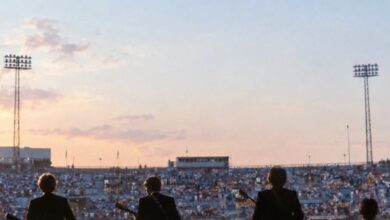
A 1983 live performance is the closest thing to seeing the song in its original natural habitat, when Pyromania material was still fresh and the band’s hunger had a rawer edge. What stands out in early live versions is the urgency: the tempo feels like it’s always on the verge of sprinting, and the guitars have that sharper, less polished bite that comes from playing to prove something. Comparing that to Vegas 2026 is fascinating, because the later performance isn’t “softer”—it’s more controlled. The band knows exactly how to make the chorus hit without rushing it, and that restraint can actually make the impact bigger. It’s the difference between a band trying to conquer a room and a band that already owns it.
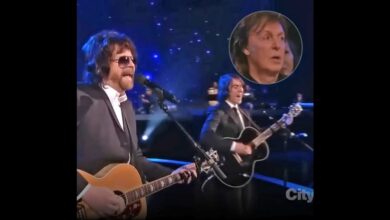
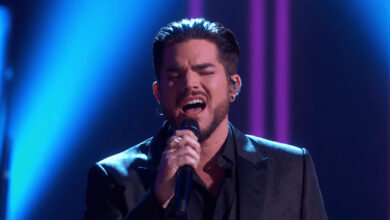
The 2019 Rock & Roll Hall of Fame Induction performance is a reminder of how “Rock Of Ages” functions as a career summary in under five minutes. It’s celebratory, instantly recognizable, and built for a room full of people who know the lyrics even if they haven’t played the album in years. That kind of setting also highlights how the song’s structure does the heavy lifting: once the riff and chorus land, the crowd takes over. The Vegas residency version draws from that same power, but with a different emotional color. Induction-night energy feels like a victory speech; residency-night energy feels like a party where the band and fans are in it together, sharing a moment that’s less formal and more personal.
A 2022 club-style performance flips the script in the opposite direction: instead of a grand theater, you get intimacy and grit. “Rock Of Ages” doesn’t shrink well—it insists on being huge—so hearing it in a tighter environment shows how the band can compress arena energy into a smaller space without losing the chorus punch. That comparison makes the Vegas Colosseum performance even more impressive, because The Colosseum sits in the middle: not a stadium, not a club, but a venue where you can do arena spectacle while still seeing faces and feeling proximity. It’s the ideal setting for a song that wants to be massive but also wants the crowd close enough to sing it back like a dare.
A 2024 stadium performance brings back the scale and the sheer physical force of thousands of voices at once, which is the traditional “Rock Of Ages” habitat. The contrast with Vegas is revealing: stadium versions feel like a tidal wave—grand, wide, and overwhelming—while residency versions feel like a laser—focused, detailed, and immediate. In Vegas, you can often hear the harmonies more clearly and feel the rhythmic lock between drums and guitars in a way stadium acoustics sometimes blur. That’s why February 28, 2026 stands out as its own kind of peak: it delivers the bigness fans want, but with a clarity and closeness that makes the song feel newly alive rather than merely legendary.
In the end, the most powerful thing about “Rock Of Ages” in Las Vegas isn’t that it proved Def Leppard can still play the hits. That part is obvious. The deeper point is that the band’s relationship with the song has matured into something richer: they understand exactly why it endures, and they perform it like they’re still grateful it exists. A residency finale intensifies that gratitude, because everyone in the room knows the run is ending and this is one of the last chances to live inside that shared ritual. When the chorus arrives and the crowd sings it back, it doesn’t feel like people remembering the past. It feels like the past and present meeting in the same roar, with the band driving both.