Creed’s “One Last Breath” Turned NRG Stadium Into A Giant Singalong At RodeoHouston On March 11, 2026
Creed’s performance of “One Last Breath” at RodeoHouston on March 11, 2026, felt like one of those strange and perfect live music moments that could only happen in a place as oversized and theatrical as NRG Stadium. The band stepped into a setting built for huge gestures, huge sound, and huge emotion, and somehow the song’s wounded intimacy still came through. That balance is what made the performance hit so hard. “One Last Breath” has always lived in the tension between pain and release, and in Houston it sounded even bigger because it was delivered to a crowd of roughly 70,000 people in a venue that can hold a little more than 72,000. It was massive, but it never felt distant. Instead, it felt like a private ache shared in public by an entire stadium of people who already knew every word before Scott Stapp even reached the chorus.
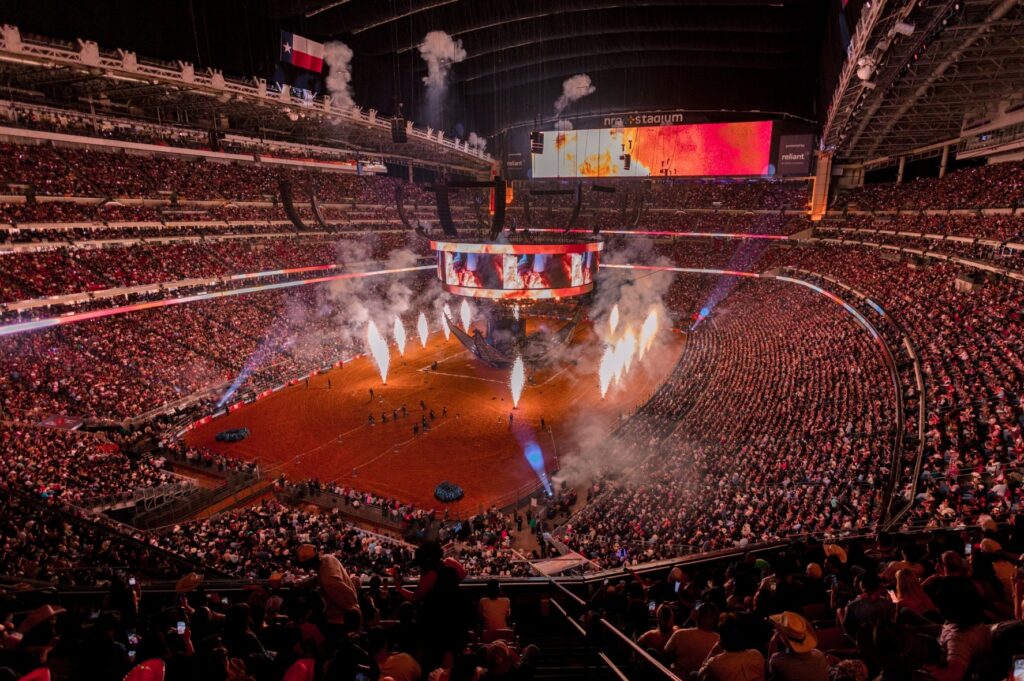
Part of what made the moment stand out was the setting itself. RodeoHouston is not just another tour stop or a regular arena show. It is part sports spectacle, part Texas ritual, part state fair, and part blockbuster concert series, which means every artist who walks into that building has to win over a crowd that expects scale. Creed did not arrive as a delicate nostalgia act trying to softly revisit the past. They came in with pyrotechnics, bombast, and a ten-song set built around the kind of anthems that defined a whole stretch of late-1990s and early-2000s radio. Yet “One Last Breath” still found a way to feel personal inside all of that noise. That was the trick. In a room designed for grand entrances and dramatic exits, the song cut through because its emotional center remains painfully human, no matter how large the audience becomes.
By the time Creed reached “One Last Breath,” the band had already taken the crowd through a compact but carefully shaped run of songs that leaned into both aggression and uplift. They opened hard, pushed through the bigger riffs, and let the audience settle into the rhythm of the night before arriving at one of their most emotionally exposed tracks. That placement mattered. The song landed late in the set, after the crowd had already been primed by “With Arms Wide Open” and “Higher,” so when those opening chords arrived, the stadium reacted less like it was hearing just another hit and more like it recognized the emotional turning point of the show. A song like that thrives when it is given room to breathe after the bigger spectacle, and Houston gave it exactly that kind of runway.
Scott Stapp’s performance style also played a major role in why this version felt different. He has always leaned into drama, but in Houston there was a more deliberate control to it. Instead of trying to overpower the song with sheer force, he let the phrasing carry the weight. His voice still had that unmistakable grainy rise that made Creed so identifiable at their peak, but there was also a little more wear in it, and that wear worked in the song’s favor. “One Last Breath” is not supposed to sound polished in a glossy way. It is supposed to sound like someone is pushing through something. In a stadium environment, that can easily get flattened into pure volume, but here the roughness gave the song credibility. It sounded lived in, not preserved behind glass.
The scale of the audience gave the performance another layer of meaning. A crowd of around 70,007 people is not just large; it changes the way a song behaves. Every pause stretches wider, every chorus comes back louder, and every familiar line feels less like a lyric and more like a collective release. That was especially true for “One Last Breath,” because it has always been one of Creed’s most vulnerable songs, even though it became a mainstream rock hit. Hearing thousands of people sing along to something so raw gave the performance a strange power. It turned private distress into a public ritual. In a smaller venue, the song might have felt confessional. At NRG Stadium, it felt almost communal, like the entire building was carrying the burden of the chorus together.
There was also something fascinating about hearing Creed perform this song in 2026, because the band’s place in rock culture has changed so much over time. For years they were treated as easy targets, the kind of group people mocked even while their songs remained everywhere. But nostalgia has a funny way of stripping away lazy criticism and forcing listeners to confront what actually connected. In Houston, that reassessment was impossible to miss. Younger fans who discovered the band long after its peak mixed with older fans who had lived through the original wave, and both groups responded with the same kind of full-throated investment. “One Last Breath” especially benefits from that reevaluation because it is one of the clearest examples of why Creed lasted in the first place. Beneath all the arena-rock muscle, the song has a real emotional wound inside it.
The visual side of the show mattered too, even though “One Last Breath” is not the kind of song that depends on stage tricks. NRG Stadium is built for spectacle, and Creed used the tools available to them throughout the night, but what made this performance memorable was not an overload of effects. It was contrast. In a set that featured fireworks, loud declarations, and a general sense of theatrical intensity, “One Last Breath” worked because it pulled the emotional focus inward. The architecture of the stadium, the height of the stage, and the sea of people all made the song look enormous, but the feeling stayed close to the chest. That is not easy to do in a venue this size. Many bands can make a big song look big. Fewer can make a deeply personal song still feel human when it is echoing through a building built for mega-events.
Another reason the Houston rendition landed so strongly is that RodeoHouston shows tend to move with unusual efficiency. Artists usually do not get sprawling marathon sets there. They get a limited window and have to make every choice count. Creed understood that and built a performance that wasted no time. “One Last Breath” was not buried in filler or surrounded by indulgent detours. It arrived as one of the late emotional peaks in a concise set that ran just over an hour, and that concentration gave it extra force. There was no room for drift. The song had to make its point quickly, and it did. In many ways, that made the Houston version stronger than some longer performances where the emotional pacing can loosen. Here, every beat of the set was aimed toward impact.
What really separates this performance from a lot of routine nostalgia-reunion footage is the atmosphere in the crowd. Creed have always been a band that inspires loud audience participation, but Houston had the added electricity of a major event crowd, not just a fan-club crowd. That changes things. It means some people in the building may have come primarily for the rodeo experience, some for pure curiosity, some for millennial memory, and some because they genuinely love these songs. When all of those motivations meet, the result can either feel scattered or surprisingly unified. During “One Last Breath,” it felt unified. The audience response made the song feel current rather than archival, which is one of the hardest things any band from that era can achieve on a giant stage.
Watching the fan-shot footage gives a better sense of why this moment worked than any short clip or polished summary ever could. The stadium scale is obvious, but so is the concentration of the audience during the song. There is something revealing about hearing a performance through the ears of someone in the crowd rather than through a pristine broadcast mix, because it captures the real exchange between stage and stands. In a fan recording, you hear the roar, the bleed, the chorus bouncing back from the seats, and the way a familiar song starts to belong to the audience as much as the band. That is exactly what happened here. “One Last Breath” no longer sounded like a relic from the Weathered era. It sounded like a song that had survived every joke, every trend shift, and every cultural reversal to become durable in a completely different way.
Going back to the official video after hearing the Houston version is a useful reminder of how much the song’s identity has expanded over time. In its studio form, “One Last Breath” is tightly controlled, elegantly melancholic, and almost cinematic in the way it balances sadness with release. The melody does a lot of the heavy lifting, and the recording lets the emotional tension unfold with precision. Live, especially in a huge setting like NRG Stadium, the song becomes more rugged and participatory. The studio track is the blueprint, but Houston showed what happens when that blueprint is run through years of touring, changing vocal texture, and an audience that has attached its own memories to every line. The result is not cleaner than the original. It is bigger, rougher, and in some ways more moving because of those imperfections.
The Houston performance also stood out because it arrived during a period when Creed’s catalog is being heard with more generosity than it was in some earlier years. For a long time, discussions about the band were often clouded by caricature, but songs like “One Last Breath” have outlived that noise. They still connect because they are built on very plainspoken emotion that does not need complicated interpretation. In a stadium, plainspoken emotion can actually travel farther than subtle cleverness. That was obvious in Houston. Nobody needed to decode the song. They just needed to feel the weight of it and answer the chorus back. When thousands of voices hit those lines together, the old debates about coolness or critical fashion felt irrelevant. What mattered was whether the song still moved people. On that night, it clearly did.
Comparing Houston with another recent live version, like the Las Vegas New Year’s Eve performance, makes the RodeoHouston take even more interesting. In Vegas, the song carries the energy of a dedicated rock crowd gathered specifically for Creed, and that gives it a different kind of intensity. The Houston version, by contrast, has to work inside a broader event atmosphere where the band must command the room immediately and keep that command without wasting motion. That challenge can sharpen a performance. “One Last Breath” in Houston feels less like a comfortable deep inhale and more like a statement placed carefully near the end of a fast-moving set. It has urgency. It has the pressure of time. And because the audience is so large and responsive, the payoff feels almost oversized compared with the song’s originally intimate emotional frame.
Another useful comparison comes from festival or amphitheater footage, where the band can sometimes lean more into atmosphere than into compression. Those performances can be excellent, but Houston had a particular tension that made “One Last Breath” feel sharper. It was wedged into a tightly structured rodeo concert, played in front of a near-capacity stadium crowd, and delivered as the ninth song in a ten-song set. That means it arrived carrying both the emotional history of the band and the practical burden of being one of the final major peaks of the night. It had to satisfy people who came for the hits, people who came for the spectacle, and people who wanted a genuine emotional release. That is a lot for any single song to carry, yet the Houston version handled all of it with surprising ease.
One of the most compelling things about Creed’s Houston performance is that it showed how reunion-era live music can become more than a simple replay of old material. The best versions do not try to recreate the past exactly. They let time show. They allow age, history, and changing audience relationships to reshape the songs. “One Last Breath” benefited from that in a major way. The song has always dealt in desperation, but in 2026 it also carried endurance. It sounded like a piece of music that had survived not just personal pain, but also cultural weather, changing reputations, and the long process of being rediscovered by new listeners who were not there the first time. That gives the Houston rendition an extra dimension. It is not only emotional. It is durable, and the crowd seemed to recognize that instantly.
The song’s placement near the end of the set also helped frame what Creed wanted this show to mean. Earlier in the night, the band hit the crowd with bigger fists-in-the-air moments and broad declarations that suited the scale of the room. But “One Last Breath” changed the emotional temperature. It made the set feel less like a straightforward parade of hits and more like an arc with a genuine point of arrival. Even in a one-hour rodeo slot, Creed managed to create a sense of narrative, and this song was central to that. It brought the audience from the external energy of a giant event into something more interior and reflective before the final push into “My Sacrifice.” That sequencing gave Houston one of the cleaner emotional builds the band has had in a recent high-profile show.
There is also something distinctly American about the image of Creed singing “One Last Breath” in a giant Texas stadium at a rodeo that blends country tradition, sports-page scale, and rock-show drama. The band has always existed in a particular corner of American arena music, where spiritual language, physical force, and emotional confession often overlap. In Houston, that combination made sense in a very immediate way. The crowd was large enough to turn the song into an event, but the song itself kept pulling things back toward vulnerability. That push and pull is exactly why this performance stood out. It was big without becoming hollow, emotional without becoming fragile, and nostalgic without becoming passive. It felt like a song that still had something urgent to say, even after all these years.
By the end of the night, “One Last Breath” had done what only a handful of songs can do in an environment like RodeoHouston: it briefly changed the scale of the room. A stadium that large usually encourages people to think in spectacle, numbers, and headlines. For a few minutes, Creed made it feel like the opposite. The song narrowed the distance between the stage and the top rows, between old fans and new ones, between a track born in the early-2000s rock machine and a 2026 crowd ready to claim it all over again. That is why this version matters. It was not simply well received. It proved that one of Creed’s most vulnerable songs can still dominate an enormous live setting without losing its emotional center, and that is a far harder trick than just playing it loud.