Yungblud Honors Ozzy Osbourne with a Powerful “Changes” Tribute at Birmingham’s Utilita Arena on April 23, 2026
On April 23, 2026, Yungblud stepped onto the stage in Birmingham with a weight that went far beyond a standard tour stop. This was not just another date on a packed schedule—it was a night rooted in legacy. Birmingham is not just any city in rock history; it is the birthplace of heavy metal, the ground where Ozzy Osbourne and Black Sabbath first changed music forever. From the moment fans began filling the Utilita Arena, there was a sense that this show would carry more emotion, more meaning, and more intensity than usual.
Long before the lights dimmed, the atmosphere outside the venue already felt charged. Fans gathered in groups, many of them speaking openly about Ozzy, about the city, and about what this night represented. Yungblud himself had framed the concert as something personal, and that energy spread quickly through the crowd. This wasn’t just about songs—it was about honoring a lineage, a sound, and a spirit that defined generations.
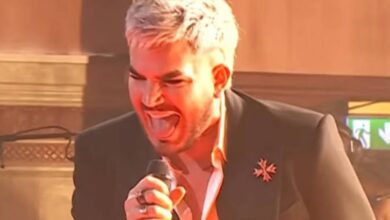
When the show began, it erupted instantly into chaos in the best possible way. Explosions of light, roaring guitars, and a crowd that needed no warm-up created a surge of energy that hit from the very first second. Yungblud ran across the stage like someone with something to prove, feeding off the audience while giving everything back. The connection was immediate, intense, and completely unfiltered.
As the set unfolded, songs like “Hello Heaven, Hello” and “The Funeral” carried the performance forward with relentless momentum. The production was massive—flames, lights, and sound filling every inch of the arena—but it never felt artificial. Instead, it amplified the rawness of the moment, turning each track into something bigger than its studio version. The crowd responded with full force, singing along with a unity that felt almost overwhelming.
But beneath the spectacle, something deeper was building. Yungblud has always been vocal about his admiration for Ozzy Osbourne, and in Birmingham, that influence wasn’t just present—it was central. You could feel it in the pacing of the set, in the way moments were allowed to breathe, and in the emotional intensity that slowly began to take over the room.
Midway through the show, everything shifted. The chaos settled, the lights softened, and the arena dropped into a near silence that felt almost sacred. It was the kind of stillness that doesn’t happen often in concerts—a collective pause where thousands of people instinctively quiet down, sensing that something meaningful is about to happen.
Then came the moment that defined the night. Yungblud began a stripped-back performance of “Changes,” the iconic Black Sabbath ballad tied forever to Ozzy’s legacy. In that instant, the arena transformed. This was no longer a high-energy rock show—it became something far more intimate, almost like a shared memory unfolding in real time.
His voice carried a different weight here. There was a vulnerability in the delivery that couldn’t be faked, a sense that every lyric meant something personal. At times, the emotion cracked through, but instead of weakening the performance, it made it stronger. It felt real, human, and completely unpolished in the best way possible.
The crowd didn’t erupt—they listened. Thousands of people stood still, absorbing every word, creating a silence that felt just as powerful as the loudest chorus earlier in the night. When they finally joined in, it happened naturally, voices rising together in a moment that felt organic rather than staged.
As the song reached its peak, the entire arena seemed to move as one. It wasn’t about perfection, it wasn’t about hitting every note—it was about feeling. And in that moment, the connection between artist, audience, and legacy became undeniable.
When the final note faded, Yungblud didn’t rush forward. He paused, standing still, letting the moment settle over the crowd. That silence spoke louder than anything else that night. It was a moment of respect, reflection, and understanding, shared between thousands of people without a single word needing to be said.
After that, the energy returned—but it wasn’t the same. It was deeper, more intense, as if something had shifted permanently within the room. The following songs hit harder, the crowd sang louder, and every movement felt more meaningful. The show had transformed from entertainment into something closer to an experience.
Throughout the rest of the performance, Yungblud blurred the line between performer and audience. He moved constantly, interacting with fans, feeding off their energy, and creating moments that felt spontaneous rather than rehearsed. That unpredictability added to the feeling that anything could happen—and that every second mattered.
By the time the final song came to an end, the arena wasn’t ready to let go. The cheers echoed long after the lights went down, as if the crowd was trying to hold onto the moment for just a little longer. It didn’t feel like the end of a concert—it felt like the end of something bigger.
Looking back, this night in Birmingham stands out not because of its scale or production, but because of what it represented. It was a meeting point between generations, a moment where the roots of rock and its future stood side by side on the same stage.
In that city, on that night, the message was clear without ever being spoken outright. The influence of Ozzy Osbourne wasn’t fading—it was evolving, carried forward by artists who understand its weight. And as Yungblud stood there, pouring everything into that performance, it felt undeniable that he was doing him proud.