The Bandmate Behind Layla Clark Is Worth a Second Look
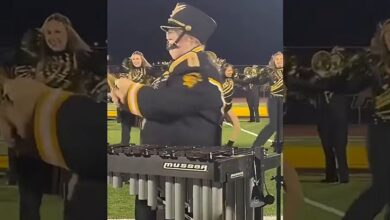
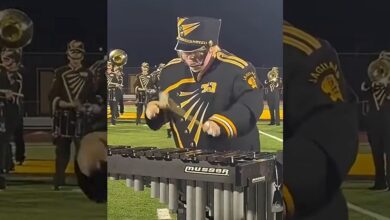
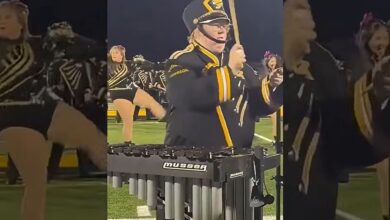
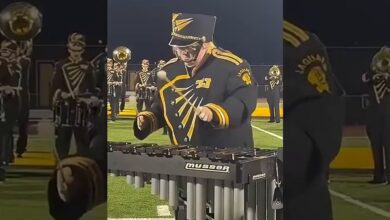
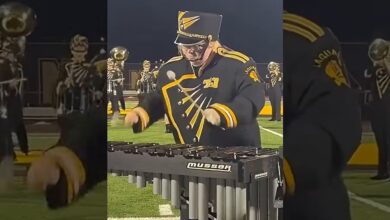
On a first pass, the camera gives you a clear instruction about where to look: Layla Clark and the mallets are in front of everything else. One viewer came back to the video and watched a girl behind her instead. The commenter thought her face showed how proud she was of the player in front.
It’s the viewer’s reading of an expression, and the clip gives you room to form your own. The rows behind the marimba are visible long enough to make a second viewing worthwhile. Some people are waiting to enter and others are already moving as the field show takes shape.
Clark has credited her bandmates for what people hear in the performance. The comment offers a visual way into that point. The person right in front of the camera gets the close-up, while the students behind her provide much of what makes the moment feel like a halftime show.
Watch the same passage twice and change only where you look. The first view tells you how Clark plays the figure. The second gives you a few seconds with the people sharing the field with her.
What changes when you stop looking at the center
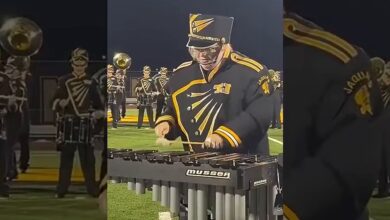
A phone clip can make the foreground seem like the whole scene. Here that foreground is busy enough to hold the eye on its own. The mallets cross part of the keyboard, the uniform catches the light and the pattern keeps coming back to a note you can hear clearly. The figures behind Clark have less space in the frame, but they are still visible. Once you know the riff is going to keep going, you can afford to watch the edge of the picture for a few seconds. The same clip starts telling a slightly different story.
The comment about the girl behind Layla is a reminder that an expression can register even when a camera is pointed somewhere else. The person who wrote it saw pride. A viewer who reads the face differently can still appreciate the choice to look there. There is an entire performance happening behind the instrument, and the people in that part of the frame are doing more than filling out the picture. You can watch them follow the music while keeping track of their own movements.
For an ensemble, listening and looking often happen at the same time. The audience hears the notes, but the players also have visual details to follow, such as the timing of a gesture or the position of another person on the field. A close-up of the marimba gives outsiders a rare view of one set of decisions. Looking behind it gives you hints of the others. The result is a more interesting picture of the field than a narrow description of one player’s speed.
There is a difference between a wide camera angle and a close-up that lets the background stay visible. The wide view makes the formation and movement easier to follow. The close view gives you faces and a little of the immediate environment around the person playing. This clip happens to give the viewer a chance to use both qualities. Clark is close enough for the mallet movement to read, and the people behind her are still close enough to reward a second look.
The bandmates who made the close-up possible
Clark told interviewers that the performance depended on the other students around her. Five mallet percussionists shared the opening. A phone angled toward one person cannot be expected to show all of those players at once, let alone the larger group that joins in after them. The wider version of the performance helps put some of that work back in view. You can hear the whole section establish a familiar phrase before the rest of the field answers it.
The pride the commenter saw is also a reasonable place to think about the difference between performing beside someone and watching a clip of them later. A bandmate has heard the same passage in rehearsals and knows what the performer is responsible for. Someone watching online can be surprised by the choice of instrument and still have no sense of the preparation behind it. The comment imagines the first kind of knowledge from the second kind of viewing. That is why an expression in the background can carry so much meaning for a stranger.
A second viewing doesn’t have to prove the commenter’s reading. It can give you other questions to follow. Who is already moving while the notes are going by? Who looks ready for a change? When does the sound grow beyond the instrument nearest the phone? The answers are easier to follow if the camera stays still. You can look between two people without losing your bearings, and the recurring riff gives you a way to hear where you are in the sequence.
The original show had a crowd, several groups of musicians and a point on the field from which it was filmed. The clip turned one of those things into the center of attention. That’s part of why it works as a short video. It is also why the background is worth preserving. The student behind Clark and the others around her belong to the same minute, and their presence changes how the foreground feels once you start to notice them.
Try the close-up with the sound on and let your eyes stay in the background until the section changes. Then watch the wider angle for the entrance. The handoff between those viewpoints is a way of seeing the group Clark was talking about when she gave credit to her bandmates. It leaves you with a little more of the original performance than the first watch did.