Ann Wilson Makes ‘Dream On’ Feel Like a Rock Performance Again at Hampton Beach
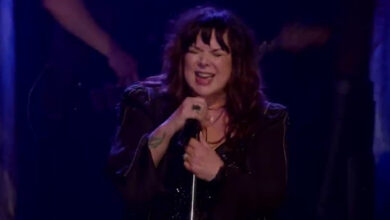
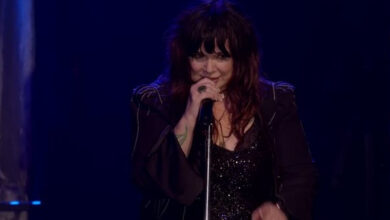
The room first hears Ann Wilson one phrase at a time. At Hampton Beach Casino Ballroom, she takes on Aerosmith’s “Dream On” with the piano giving her somewhere quiet to start. The melody is familiar enough that most listeners know exactly where the song is headed. Wilson makes that knowledge work in her favor. The opening puts the room close to the words, and by the time the band is playing at full strength you have a reason to care about the voice coming through it.
A viewer of Wilson’s official live video put her among the greatest voices in rock history. The compliment suits the range of things she does here. You can hear a note with a grain on the surface and a clear center underneath it. You can follow the way she holds back on an ending because the next line needs to come forward. Those are skills that become more significant when there is a whole band waiting to turn the arrangement up.
The performance comes from August 18, 2021, during Wilson’s solo show in Hampton Beach, New Hampshire. The Amazing Dawgs had room in the set to move between Heart material and songs by musicians Wilson had listened to and sung for years. “Dream On” gives this particular group something to do with its dynamics. The opening depends on a small amount of sound. The closing can sustain a far heavier arrangement because the musicians have left the best part of their volume in reserve.
Aerosmith’s original gives a cover singer a very public destination. People know Steven Tyler’s voice and can anticipate the point where the song climbs into its highest register. Starting there emotionally would leave a long stretch of music with nowhere to go. Wilson treats the earlier lines as a scene of their own. The first verse gets quieter attention than the climax, and each phrase leaves the sense that the singer is still deciding how much of the thought to let out.
The ensemble helps maintain that patience. The piano establishes the changes without crowding the microphone, and the rhythm of the phrases stays easy to follow when the rest of the band becomes audible. There is a moment when the song begins to feel physically larger than the opening suggested. Wilson’s voice is still plainly in front. Part of the excitement comes from hearing a singer maintain the center of a piece after the amount of sound behind her has changed.
The best way to hear the difference is to start at the beginning and stay with it. Catch the texture of the first long word and then keep track of what happens as the accompaniment thickens. The famous vocal passage has a lot more impact once you have had time to hear the sound she is building from. That arc is what makes the Hampton Beach film worth watching in full.
Watch the performance
There is plenty of force in the last stretch, but the performance also makes a case for musical placement. Wilson knows the vocal will come through with more authority if the band can be heard underneath it. She gives the notes their own attack and finishes phrases inside the rhythm instead of leaving the band to chase her. The arrangement has a clear center at a volume where a less experienced singer might start competing with the other people on the stage.
Rock singers often get remembered for a moment that can be clipped to a few seconds. Wilson’s performance gives you several, including the lift in the refrain and the bigger notes that follow. Its lasting quality depends on the way those moments are joined. At the beginning she has the sound of a singer telling you something she has thought about. At the end she has the sound of someone who knows how to let that thought reach the other side of the room.
The distinction between her delivery and the one people know from Aerosmith is just as interesting in the early sections. Tyler can lean into the vowels and build the strain of the melody into the sound of the word itself. Wilson has her own way of making the vowels sit, and the weight of her lower register comes through before she asks it to rise. The song is sturdy enough to hold those different kinds of voices without losing its musical identity.
The room makes a difference too. The official video can move in far closer than most people in the ballroom would have been able to get, but you can still hear the band playing to the space around them. It is a useful combination. The camera shows where Wilson pulls toward or away from the microphone while the sound tells you when the group is filling the room. The best details come from following the two together.
Because the show was part of a solo run, the footage is also a chance to hear Wilson in a repertoire shaped around her own interests. The same night included Led Zeppelin material as well as Heart favorites. The variety helps explain why a single Aerosmith song can feel so at home in the set. A singer who gives a room several kinds of rock music in one evening can use each one to show another part of the voice.
“Dream On” has an anxious energy beneath all of its grand gestures. The phrasing asks the singer to make looking back feel immediate, and Wilson has enough detail in her tone to bring that out. That is where the fan’s compliment feels most apt. There is a great voice here, and there is also a performer who knows how to use an audience’s familiarity with a melody to take the song somewhere emotionally specific.
The piano is worth following all the way back to the start on a second pass. What seemed like a simple entrance turns out to be the part that sets the scale of everything else. It tells you how much can be heard in a small space before the band gets louder. By the close, the room can hear all of Wilson’s power. It also remembers what her voice sounded like when she first asked for its attention.
Two more versions
Aerosmith’s original recording lets you hear the way the early lines already contain the tension that Steven Tyler will release later. Put it next to Hampton Beach and keep track of where each singer first lets the voice roughen. That comparison makes Wilson’s lower opening feel more deliberate, because the two singers build anticipation in different places before the same melodic climb.
“Black Dog,” from the same Hampton Beach show, gives Wilson and the Amazing Dawgs a song that starts from the tension between a voice and a guitar riff. The space between those entrances has the same importance that the piano’s pauses have in “Dream On.” Hearing the band make room for her in both settings brings out how much of the performance depends on timing.