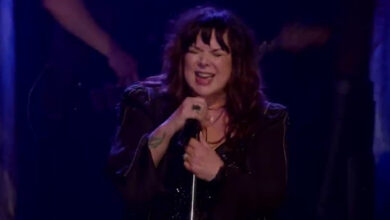
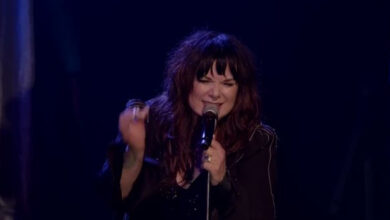
At 71, Ann Wilson Let the Years Into Her Voice on ‘Dream On’
“Dream On” opens with the image of someone noticing time in a face. Ann Wilson had already spent decades singing in front of other people when she came to that part at Hampton Beach, at the age of 71. The piano gives her a few seconds to establish how she’ll approach the line. She allows the sound of an experienced voice to be part of what the words say. The song is well known for testing the upper register, but the first thing you hear is a singer setting the story in motion.
A viewer underneath the official video was struck by how rare it is for a singer to sound that good around 70. Wilson was 71 when the performance was filmed, on August 18, 2021, at the Casino Ballroom in Hampton Beach, New Hampshire. The date helps put the response in perspective. For people who had first heard her with Heart, the voice in this recording comes with decades of memories. The sound they hear now still has an identity of its own.
It is easy to treat age as a statistic and go straight to high notes as evidence of a singer’s staying power. The low phrases tell more of the story here. Wilson gives the ends of the words a little roughness, and you can hear her settle into the depth of the sound she has at this stage of her life. There is a calm rhythmic assurance to those opening lines. She sounds as though she knows what they are going to mean after the rest of the song has happened.
The age of the song is part of the effect. Aerosmith first released it in 1973. Its first-person images have stayed in circulation long enough to be heard by several generations of singers and audiences. Wilson brings a different relationship to that passage of time. She can sing about seeing it go by with the weight of a musician who has had a public voice for years, and the setting lets the listener hear the distance between that experience and the quiet opening of the arrangement.
The Amazing Dawgs give her a steady path toward the bigger sound. The piano keeps the beginning simple, and the band can build once she has made the words matter. That gradual increase keeps the emotional center in her voice as the performance grows. Even when she starts to rise into the most famous part of the song, you can still hear the character that was present in the lower register. The audience gets to follow the same person all the way up.
The official film makes the change in scale plain. Spend some time with the first lines and notice how little she needs around her at the start. Then hear how the voice comes through once the band fills out. There is a thread of sound linking the warm low notes to the brighter ones, and that thread gives the performance a little more depth than the number in the headline can convey.
Watch the performance
People who followed Heart for years may recognize the way Wilson controls a phrase from the moment she puts the first sound into it. There is enough experience behind that choice to make it feel familiar and enough texture in the Hampton Beach recording to make it feel current. The years show up most clearly in how she decides when to spend energy. She has a whole song to sing, and you can hear her make the first half valuable in its own right.
She has always had repertoire that gives her room to move between tenderness and force. “Dream On” makes the transition unusually easy to isolate because the accompaniment begins at such a small scale. It also puts that transition inside a song written by another singer, one that audiences often hear as inseparable from his particular sound. The familiar melody becomes a useful way to compare what Wilson does with the lines and what listeners may remember from their first experience of the record.
That comparison can start in the vowels. A rough note can suggest strain, warmth or resolve depending on where the singer puts it. Wilson often lets the roughness be most audible as she leaves the word. The note is already through before you hear its edge. That gives the interpretation some of its reflective feeling. As the song gets louder, that small detail stays as part of the voice even when the microphone is picking up a much bigger sound.
There is a reason the venue recording works well for this angle. You hear the voice in real time with the piano, drums and guitars, and each part of that blend has a relationship to the room. The balance gives Wilson enough space to begin softly and enough band around her to make the closing stretch sound substantially different. That dynamic contrast puts the decades in her voice into a setting where both restraint and power can be heard.
Wilson’s age also brings a different perspective to the dream at the center of the song. The act of looking back sounds personal here because it belongs to a performer who has heard audiences sing back her own work for years. At Hampton Beach she turns her attention to a song from another band’s catalog. She can take seriously what it says about growing older while giving a live audience the charged release it wants from the refrain.
The small details make the performance stay interesting after the first viewing. The piano leaves a gap and Wilson decides how to fill it. The band comes up and her voice stays distinct within it. The refrain opens and the authority of the low voice is still present inside the lift. At 71, she can draw on the whole life of that voice within a performance only a few minutes long.
If you go back after the big notes, listen to what remains in the opening. The strongest part of the performance might still be the feeling in the first verse, before Wilson has done anything that calls attention to her range. It gives you the meaning of the final stretch in advance. The song gets bigger, and the sound of someone looking back is there right through the climax.
Two more versions
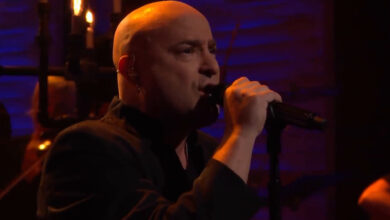
Steven Tyler’s performance with Slash and Train on the Stern Show gives the song a different kind of live urgency. Listen to the way Tyler lengthens the vowels as the tension rises, then return to the measured tone Wilson finds at Hampton Beach. You can hear two singers working with the same passage of time in the lyric and giving it very different temperature.
Wilson’s “Black Dog” from the same night has a much more angular shape, with her lines separated by the guitar riff. It lets you hear the same seasoned voice in a setting that asks for speed and bite. The contrast puts the patience of “Dream On” into focus. Both sides of the voice were available to her in the same room on the same evening.