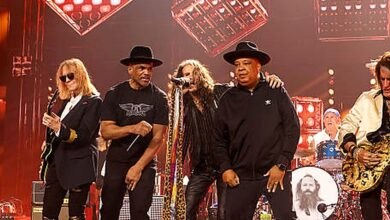
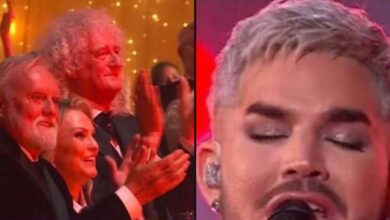
Myles Kennedy and David Draiman Let Two Heavy Voices Share “The Sound of Silence”
A comment under Disturbed’s concert video imagines someone telling David Draiman and Myles Kennedy that metal vocalists can’t really sing. Draiman is ready to take the challenge and Kennedy answers with one of his own. It’s a good joke to keep in mind when “The Sound of Silence” starts in Houston. The first thing these two singers do to make their case is leave an extraordinary amount of room around the words. That patience makes it possible to hear exactly what the second voice changes.
The performance took place on August 13, 2016, at the Cynthia Woods Mitchell Pavilion in The Woodlands, near Houston. Kennedy was touring with Alter Bridge and joined Disturbed for their arrangement of the Simon & Garfunkel song. Draiman had already recorded the cover for Immortalized, so Kennedy was stepping into a version with an established shape. The entry works because he can hear where to put another melody without making the recognizable part feel like it has lost its footing.
Draiman begins with the weight low in his voice. The piano gives him a place to arrive, and he puts enough edge into the opening words for the audience to catch them without forcing their way through the accompaniment. You can get used to following that line quickly. When Kennedy enters, that familiarity helps. His voice can take a phrase upward while the melody beneath it still supplies the same path through the song.
The upper part is easier to hear if you pick one phrase and follow it for its whole length. A strong lead singer can make a line bigger by extending the end of a vowel. In harmony, that extra length also means committing to the other singer’s timing. When the two are nearly together, a difference in where they finish a phrase can change what stays audible. The Houston recording lets you hear how much care both men put into those endings.
Draiman told Music Connection that Kennedy had worked on a harmony and that they tried the idea together before taking it to soundcheck. The run-through gave each singer a way to hear the other line in the live mix. That detail matters on a song whose accompaniment swells in stages. A line that sits easily over the piano has to find a place in a fuller arrangement later. The rehearsal helped them keep the relationship between the voices audible as the volume rose.
The original joke gets its happiest answer when the duet is in full flight. Draiman and Kennedy both have the range to draw attention to themselves. In Houston, the impact comes from what they can do at the same time. Following the raised line for a few bars and then returning to the lower one lets you hear how the emotional pressure passes between them. The parts are so closely fitted that you may notice a different detail on the next play.
Watch the performance
Both singers come from bands that offer them opportunities to carry a much louder sound. That makes it tempting to think about the performance in terms of how long either could sustain a big note. The first minute is a better guide to their choices. Draiman saves much of his strength at the opening, and Kennedy can enter with a tone light enough to preserve the intimacy of the words. The change in scale has somewhere to go because they gave it a clear starting point.
Kennedy’s contribution becomes particularly clear if you compare the Houston footage with the studio recording. The accompaniment already gives Draiman a way to build the song with one vocal. Houston keeps that trajectory and adds another place for the ear to settle. Even a listener who has played the Immortalized track for years can suddenly notice how long the central melody holds still while the harmony moves. That’s part of the appeal of hearing a familiar arrangement open up in front of a crowd.
There is also a physical part to it. The video lets you see how close the singers are, and it gives you a chance to watch either one prepare for a line while the other is still audible. That preparation can be as expressive as the note that follows. The duet feels spontaneous to watch, especially given its origin on a shared tour, and the sound bears the marks of two musicians paying attention to pace and balance.
Draiman said the band’s monitor engineer captured the performance. Disturbed included the live duet on the deluxe edition of Evolution, where listeners could hear the combination away from the stage footage. That is a satisfying end for an idea that began with one musician trying a line against another’s arrangement. The crowd got to hear it tested in the room, and the recording gives the rest of us the time to hear what both parts are doing.
Another detail surfaces when both singers have already arrived on a held note. You can still follow the texture of each voice through the sustain. The lower sound keeps the phrase grounded while the upper sound gives it a place to travel. Hearing that balance in the same breath makes this a particularly good rendition to revisit with headphones.
Two more versions
The Immortalized recording puts the whole vocal rise in Draiman’s hands. Notice how long the piano leaves him out in the open. That space is still available in the live arrangement, and it explains why Kennedy can occupy it with such an audible upper line. The studio version also lets you hear the modern cover’s familiar shape before comparing a specific verse in Houston.
Alter Bridge’s “Blackbird” from the Royal Albert Hall puts Kennedy in the lead with the Parallax Orchestra behind the band. The longer phrases give his voice time to spread out on its own terms. That makes an instructive comparison with Houston, where a similarly clear tone is used to carry the upper part of a partnership. The two settings give you a good sense of the decisions Kennedy made when he joined Draiman.