How Adam Lambert Made the Last Climb in Queen’s Ballad Sound Effortless
At Stockholm’s Polar Music Prize, Adam Lambert reached the last climb in “Who Wants to Live Forever” after spending most of the performance making sure it had somewhere to go. He had Brian May and Roger Taylor in the room, and the song was one they knew from both the recording studio and the stage. The finished sound feels big enough to bring Queen’s stadium years to mind. Its most interesting choices are on the scale of a singer’s next breath.
The opening gives you a useful way into it. Lambert comes into the lines cleanly and keeps their movement close to speech. You can hear the individual syllables register before he asks the voice to sustain anything dramatic. When a singer has the range to make this particular song explode, there is real discipline in letting the audience get used to the shape of the words first.
Follow the end of a phrase as the melody starts gaining height. A sustained note has a point of arrival, a center and a release. Lambert makes those feel like parts of the same thought. The strong sound sits on a recognizable vowel long enough for the line to reach you, and the release leaves the next breath sounding like part of the music.
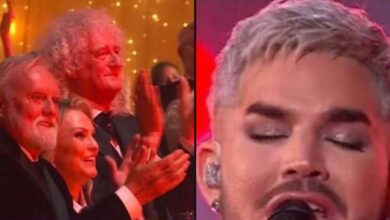
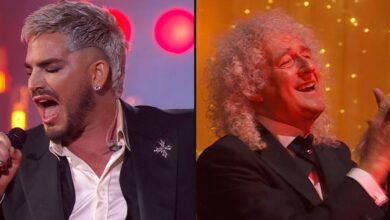
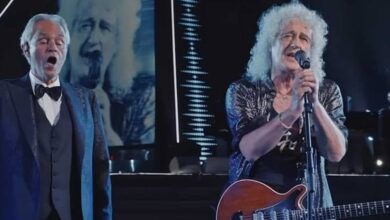
Queen received the prize at Stockholm’s Grand Hôtel on May 27, 2025. May and Taylor accepted on behalf of the band, and Lambert sang both “Who Wants to Live Forever” and “Another One Bites the Dust” that night. Seeing them in the audience changes the feeling of the ballad. People whose playing helped define the scale of the song get to hear a singer they know well make a new decision about how to approach it.
May wrote the song for Highlander in 1986. It was already a composition built to let a first voice set the terms and a second voice widen the frame. Queen’s studio recording makes that progression audible in the contrast between May and Freddie Mercury. Lambert has one lead vocal to cover that kind of distance on the Stockholm stage, and his use of changing pressure and pace gives the melody its movement.
The standing ovation is the part most clips can show in seconds. Give the performance the time it actually takes and another bit of the story comes through. Lambert lets the vocal gather at a rate that earns each new level. The biggest sound arrives after you have had a chance to hear the small decisions making it possible.
Watch the performance
The quiet phrases set the distance
A singer can tell you a great deal about the eventual ending by how they open a ballad. Put too much weight into the first line and the listener gets the emotional scale before the words have had a chance to make it personal. Lambert uses a leaner delivery at first. The notes still have a clear center, and the pitch has somewhere to settle before the accompaniment pushes the line higher.
Listen for where the music leaves him a sliver of space between sentences. The breath he takes there technically belongs to the next line, but hearing it can make you feel the size of the line he has just finished. One reason a live vocal can be so absorbing is that you hear a singer measure the distance in both directions. The arrangement has a pace and the body onstage has to live inside it.
There is a revealing change in the way the vowels travel as the song gets bigger. A soft word has room for its corners. Farther up, the vowels have to take more of the weight if the note is going to stay connected. Lambert keeps enough diction for you to follow the words even when he lets the line stretch. That combination is a better measure of what he does here than the highest pitch on its own.
The accompaniment helps the listener hear that progression. The earlier lines sit inside an open sound with clearly marked spaces for the singer. When the arrangement thickens, his voice has to reach through more of it. Follow the melody at a quiet volume and you can still hear where Lambert puts the weight. The contour of the line stays unusually clear.
Why the room’s reaction feels earned
It is tempting to put all the emotion into the cut to Queen. There would be a story in that expression of approval even if you knew very little about the hours these musicians had spent onstage together. The performance has a story you can hear with your eyes closed, too. Each time the vocal rises, the quieter part you heard before it gives the new sound a sense of distance traveled.
By the time Lambert is singing at full size, he still sounds capable of softening a line again. That flexibility is easy to overlook in a room waiting for the biggest notes. There is something unusually exposed about a singer negotiating such a long phrase in real time, keeping enough air and time for the next part of it to mean something.
May and Taylor are a particularly good audience for that. The distinction between learning a difficult song and learning how to pace it becomes clear when you have lived with the piece for years. Their response is part of the footage. The vocal that precedes it is the part worth taking into your next listen.
Two more versions
Queen’s original video gives you the familiar balance between May’s opening vocal and Mercury’s bigger entry. Hear how much space the arrangement leaves before it expands. Lambert builds a similar sense of distance in Stockholm while carrying the lead vocal through the whole arc himself.
The 2016 Isle of Wight Festival performance gives the song a louder, more open stage around Lambert. You can hear how a festival mix gives his vocal another kind of support. Put it beside the Stockholm version and the way he controls the transition out of each small phrase becomes easier to pick out.