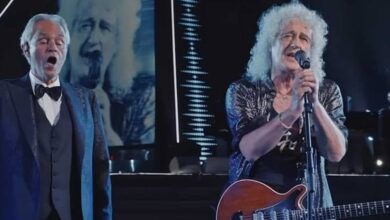
Where Adam Lambert Puts His Own Stamp on a Freddie Mercury Classic
Brian May was in the audience when Adam Lambert sang one of May’s own Queen songs back to him at the Polar Music Prize. “Who Wants to Live Forever” is so closely associated with Freddie Mercury that a strong performance will bring the original to mind even when the latest singer has changed almost nothing. Lambert takes opportunities to change the important things that a singer can control without disturbing the tune. You can hear it in how he places the words.
At the start in Stockholm, the smaller sound keeps the scope of the lyric close. The entries are easy to follow, and no one syllable seems to bear the entire weight of the idea. Lambert softens the way into a phrase, then brings a word forward as the accompaniment gives him a space to put it. The effect is of a singer telling you something he has taken time to think through.
One could easily remember this particular performance as a succession of high notes. Its emotional timing is harder to forget once you have heard what happens before the more exposed phrases. When Lambert comes off a line without immediately hurrying to the next one, the music gives the words time to settle. The choices make the bigger passages feel like an extension of the thought he started quietly.
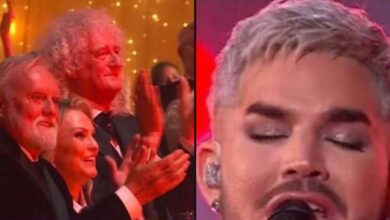
Queen were honored in Stockholm on May 27, 2025, and Lambert sang two pieces for the occasion. The Grand Hôtel setting brought him to a room with May and Roger Taylor in the audience. In his work with Queen on tour, they generally share the stage. At the ceremony, they got a chance to be listeners and the camera sometimes gives you the option of taking in the performance through their response.
May originally wrote the ballad for Highlander. The Queen studio version moves from May’s opening into the sound of Mercury, and that shift helped establish the song’s wider identity. Listeners who know it by heart can anticipate where the music will begin to ask more of a singer. Lambert gets to those places by ways that sound specific to him, with a different set of accents and a distinctly elastic approach to time.
The most revealing comparison is between the scale of the opening and the shape of the full voice later on. Lambert makes the words intelligible at both sizes. His timing stretches, but it keeps the consideration he brings to the beginning. That is a good place to look for his identity within a performance meant to honor someone else’s band.
Watch the performance
What changes inside a familiar melody
The easiest thing to copy in a famous song is its series of high and low notes. When you know a recording well enough, however, you remember a singer’s mechanics too. You anticipate the length of a syllable, the firmness of its entry or the moment a consonant catches the line. These details help make a record feel like it has somebody’s name on it. They give another singer room to bring something of their own.
Lambert respects the broad architecture. The early part moves in small, comprehensible steps, and the changes in the accompaniment still lead the ear toward the rising melody. Within that structure he can make a turn sound almost spontaneous by giving one vowel another fraction of time. He can release that pressure just before the next phrase so you catch the feeling of his breath moving underneath.
Those are especially useful choices in a performance which has the memory of another voice in the room. It would be possible to emphasize similarities throughout and give a listener the pleasure of recognizing them. It takes a particular kind of confidence to let the song do that work from its own melody and give yourself permission to sing a phrase according to the sound of your own voice.
The difference is easier to hear if you play the Stockholm performance once without looking at the images. You may hear the notes as you remember them from the Queen record and then realize the word has landed somewhere a little different. The time Lambert takes over the quieter material has its own musical personality. The camera can make the event more moving, but the voice already supplies that detail.
A ballad with a theatrical scale
Lambert has a way of making a long line feel like an event without letting the last seconds of it detach from the song around it. That matters because the words in this ballad carry an enormous question in a small number of syllables. There is enough room in the arrangement to make the melody seem to hang while the audience catches up with what it has just heard.
Seeing May and Taylor stand makes the connection to Queen literal. The sequence also invites a much quieter pleasure on a replay. The band’s history and Lambert’s phrasing are both in the room. One is there in the faces and the song. The other is there in the extra moment he gives a word as he gets ready to move on.
The singer who can make that transition believable has earned the bigger note. By the end, Lambert has drawn on a theatrical sense of scale and on the much smaller skill of letting a sentence finish clearly. That is why the version can sound very much like a Queen ballad and still leave you remembering the decisions Adam Lambert made on the night.
Two more versions
Queen’s original video makes the handover between Brian May and Freddie Mercury easy to hear. Keep your attention on the position of the words inside the melody as Mercury takes over. The differences stand out when you go back to Lambert’s wording and timing.
The Isle of Wight recording puts Lambert back onstage with Queen under the much broader conditions of a festival. The instruments have more of the immediate impact here. Compare the way he opens up the louder part, and the quieter space he has available for the same idea in Stockholm.