The Rock Hall Finale That Put Viewers Back in Front of MTV
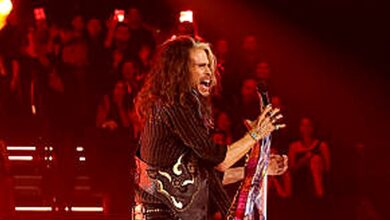
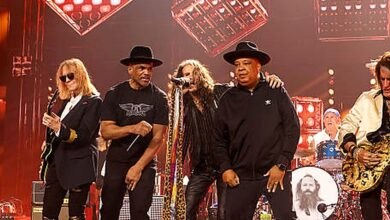
People who remember watching MTV in the eighties may have heard more than a guitar when Joe Perry began “Walk This Way” at the Rock & Roll Hall of Fame. For some of them, a few bars are enough to bring up a video of two groups on opposite sides of a wall. Steven Tyler interrupted the opening before the Peacock Theater audience could settle into it, and two people arrived whose voices had belonged to that memory for forty years.
The pleasure of the finale is how briefly it takes to put that association back in motion. Rev Run and DMC appear. The guitar comes back. The sound that began as an Aerosmith introduction has the time and the space in it for the people who used it to make a hip-hop record. The audience can hear the change even if the opening part is exactly the one they were expecting.
The ceremony took place on November 14, 2026, in Los Angeles. The performance honored Rick Rubin, whose production helped Run-DMC’s 1986 version reach listeners who might have known one of the two acts and barely heard of the other. A cover sometimes gives a song an entirely new sound. Here, a familiar sound was useful precisely because a different set of performers could build something around it.
The music video supplied an image that made that musical possibility obvious. As the groups make noise in adjoining rooms, each can hear the other without being in the same frame. Tyler’s breakthrough turns the awareness of another sound into the fun of sharing it. Someone who remembers the camera on the wall can watch the Rock Hall opening and recognize a similar story unfolding with a pause and two entrances.
There is a good reason to look back at the original video and still give this performance a hearing on its own. An edited clip can hold back information until it wants the viewer to see it. On the live stage, the audience can look anywhere. The timing of the interruption lets people turn toward the new arrivals before the music starts filling their attention again.
Start with the guitar in the concert footage and listen for the change in the crowd after it drops out. That is the live version’s equivalent of a cut in a music video. The sound has stopped and the viewer gets to ask where the story is going.
Watch the performance
What MTV made easy to remember
The video turned a question about musical categories into a piece of choreography anyone could understand. Two performers hear each other. The barrier that makes their sounds separate gives way. The person who has never bought records by either group can follow it as a physical event, and the person who already loves the riff can enjoy hearing the same thing from a different side of the room.
The Rock Hall finale has those same kinds of decisions to make in front of an audience. It has to make the moment of recognition obvious, leave enough space for surprise and keep the music moving after the novelty of the reunion has had its first effect. Perry can take care of recognition quickly. Tyler’s interruption protects the surprise. Once the voices start trading space, the rhythm does the rest.
MTV viewers might remember the physical argument before they remember the exact sound of the single. That is one reason it is worth turning away from the picture for part of the live footage. Perry’s riff can work as a guitar hook or as a grid for the words that land over it. The visual meeting mattered because this musical connection was already strong enough to become a record.
Chad Smith’s drumming gives the live version a useful kind of steadiness. When more people take positions at the front, the backbeat keeps marking where their ideas come home. With that support, the audience can shift its attention between two different approaches to the words and continue hearing one recognizable figure behind them.
A reunion audiences could recognize from the first bars
The first moments of the show let a listener enjoy a familiar reaction. The riff arrives and a roomful of people know where they are. The pause is the new part, because the band gives people a second to wonder who will come next. It is a clever way of retrieving some of the surprise that a song loses after it has been a hit for decades.
After the interruption, the whole visible space of the stage changes. Figures who were out of view now have a place near Tyler. The camera may move between performers, and the room still has the freedom to look between them. That shared freedom is one of the differences between remembering the MTV clip and watching the moment take shape in public.
There is also a pleasure in hearing the other musicians make a better-known part of the story possible. The lead performers have to be able to stop, turn and change who sings without losing the crowd, which depends on an arrangement the entire stage understands. In a recording, those choices can disappear under a clean cut. Live, the pauses are there for everyone to sit through.
The Rock Hall performance can send you back toward an old screen memory. It can also be a first encounter with two acts who made an unlikely sound familiar. The room’s response comes from people finding their own route into the song. Some have waited for the guests since the first chord. Others can see right there what changed when they walked on.
Two more versions
The official Run-DMC music video gives the reunion its famous visual script. Watch where the camera places Tyler and the rappers before anybody shares an opening. The difference between seeing a wall give way and hearing Tyler stop a riff is a good way to compare the two settings.
The Hollywood Bowl audience footage shows how the same collaboration reads from the other end of a larger venue. The figures onstage are smaller from that angle, so listen for the moment the crowd realizes the recording it remembers is coming to life below them.