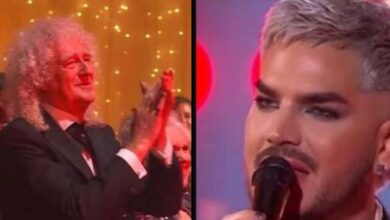
Brian May’s Voice Makes the First Move in His Andrea Bocelli Duet
Brian May’s voice is the first part of the exchange worth following in his Teatro del Silenzio duet with Andrea Bocelli. Queen listeners will recognize the melody almost immediately, and May’s guitar is a familiar presence whenever it appears. His singing has a job of its own here. It establishes a small center of attention before a tenor with a very different sound enters the same song.
The 2024 Tuscany performance gives the song room to feel both personal and expansive. “Who Wants to Live Forever” has been heard in stadiums, in headphones and in the context of Highlander. A duet where one singer helped create the music and the other comes from a different vocal tradition lets those histories sit together without making either man carry all of them.
Listen first to the edges of May’s phrases. His tone is close and human in scale. If you know the recording well, you are hearing somebody whose relationship to the melody is as direct as it can be. There is room in that delivery for a stronger voice to arrive without taking away the quality that made the opening interesting.
Bocelli gives the long phrases a broader sound. You can hear the difference in how the tone opens across a vowel. The important detail is that the song has introduced May’s delivery clearly enough for it to remain in your ear after the tenor arrives. The two colors are easier to appreciate because the performance has given each a place.
The guitar is a third recognizable sound in the exchange. It can carry the shape of a vocal phrase with different means, especially in a song built around notes that stretch. Keeping it in mind gives you something to listen for after you have heard both singers. May’s sound is present in the performance in more than one way.
The official Teatro del Silenzio clip is worth watching from the start, especially if you usually arrive for Bocelli’s larger moments. Follow how May shapes the first line and what he leaves open at its end. The handoff has more impact when the opening voice has had time to establish a connection with the listener.
Watch the performance
Queen’s original recording already has a relationship between more than one vocal color, something that can be easy to overlook when Mercury’s singing is the part a listener remembers first. In the Tuscany performance, the distribution of the voices makes that relationship impossible to miss. The change of tone gives a familiar lyric new physical dimensions.
Part of the sound of a duet is the memory of each person’s voice while the other one sings. The two styles are far enough apart that the listener has plenty of detail to follow without needing the arrangement to announce every shift. You can hear the different sizes of the voices as related parts of one line of thought.
Once the performance is finished, the first phrase may be the one you want to replay. The force of the later sound is obvious. The opening remains interesting because it explains what kind of space the duet has decided to use, in a place where a song with a long history can feel quite close.
Two more versions
Queen’s official video puts May beside Freddie Mercury in the original recording. The change in vocal color is already part of the composition, and the growing orchestration makes each entrance register differently. The Teatro del Silenzio performance makes that original relationship easier to appreciate by bringing it into a new pair of voices.
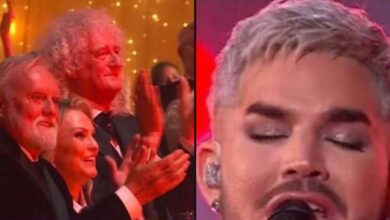
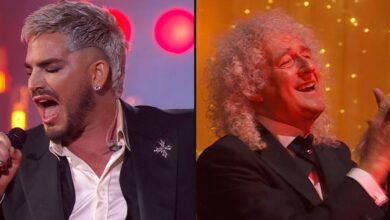
At the 2025 Polar Music Prize, Adam Lambert carries the song as a solo vocal. The opening still has room to be delicate, then the same singer has to supply the change in weight. That interpretation makes the handoff between May and Bocelli particularly clear when you return to the Tuscany clip.